Let’s walk hand in hand
(Trust Registration No: IV – 160400379 / 2025 , 80G , 12A , NITI AYOG Certified)
Culture : Concept
Let us see what India Chronic Poverty Report made by Indian Institute of Public Administration, New Delhi, 2011 says.
“Dr. Rajendra Prasad, President of the Constituent Assembly, remembered the services and sacrifices of all the men and women, known and unknown, who had faced bullets, death, prison, exile, humiliation and lost wealth, property and time with family and friends in the achievement of Independence. To embark on the task ahead, he asked for ‘unstinted service and cooperation’ from the people, noting that ‘we shall to do our best to deserve it.’ The famous Tryst with Destiny speech by India’s first Prime Minister, Pandit Jawaharlal Nehru, recognised that freedom and power bring responsibility and that it would be necessary to strive to fulfil the pledges made.
Further, he saw that working in the service of India meant working in the service of the millions who were suffering, and required a fight to end poverty, ignorance, disease and inequality of opportunity. The purpose was to bring freedom and opportunity to the ‘common man,’ peasants and workers of India and to build a prosperous, democratic and progressive nation, including social, economic and political institutions to ensure justice for every man and woman. All were equal as the children of India, with equal rights, privileges and obligations.
Dr. Sarvepalli Radhakrishnan, India’s first Vice President, also noted that a free India would be judged by the way it served the interests of the common people in terms of food, clothing, shelter and social services. He also saw eradicating corruption as critical to achieving efficiency in administration, as well as in production and distribution.
In his address on Independence Day, 15 August 1947, Dr. Rajendra Prasad asked that Indians resolve to create the conditions to enable all individuals to develop and rise to their fullest stature, such that poverty, squalor, ignorance and ill-health would vanish and the distinction between high and low and between rich and poor would disappear. He additionally hoped that religion would be practised freely and would not divide and separate, that untouchability would be forgotten, that ‘exploitation of man by man’ would cease, that those who were ‘backward’ would catch up with others and that there would be no hunger.”
According to the India Chronic Poverty Report (2011) prepared by the Indian Institute of Public Administration, New Delhi, India’s position today reflects both progress and persistent challenges. At the time of Independence, national leaders pledged to build a society based on equality, justice and dignity for all. The report examines how far the country has moved towards achieving these goals.
Politically, India has successfully established a democratic system with constitutional institutions and fundamental rights. Citizens enjoy political freedom, and democratic processes function regularly. However, the report emphasizes that political independence alone is not sufficient. Economic and social freedom remain incomplete for large sections of the population who continue to face poverty and deprivation.
Economically, India has achieved notable growth, but its benefits have not reached everyone equally. Chronic poverty still affects millions, particularly in rural areas and among marginalized communities. Inequality in income, access to resources and opportunities remains a major concern. This indicates that the pledge to eliminate poverty and provide equal opportunity is yet to be fully fulfilled.
Social development has shown improvement in literacy, health indicators and awareness, yet deep-rooted problems such as caste discrimination, gender inequality and regional imbalance persist. Many citizens still lack access to basic necessities like adequate food, healthcare, education and shelter. Corruption and inefficiency in administration further weaken the delivery of welfare services.
The report reinforces the vision expressed by leaders like Dr. Rajendra Prasad, Pandit Jawaharlal Nehru and Dr. Sarvepalli Radhakrishnan, who believed that true freedom must improve the lives of the common people. In conclusion, the report suggests that while India has made significant strides since Independence, the promises made in 1947 are only partially realised. Continued collective effort and responsible governance are essential to achieve the ideals of equality, justice and inclusive development.
We need to bring about a Culture. This appears to be the need of the hour today.
So what is culture? It could be compared with the container, so to say, the cooking pan that cooks different ingredients upon the burner. If this container is perforated, could cooking be done?
It is the same thing in the society. The culture of a society acts as the container where politics, economics and all social activities and also science & technology are cooked. If this society does not have or lacks the adequate culture how cooking of all these things be done?
In order to initiate progress or development in a society in every sphere of life, the first precondition is to create culture which would facilitate the cooking of all these activities. Culture creates a ‘system or discipline’ which in turn builds a nation.
Every person should regard every other person as his fellow citizen with dignity and respect irrespective of caste, creed and religion. If we could not achieve it we can never progress as desired. If we could achieve it, the exploitation of man by man would cease to exist. The criminalization of politics and rampant corruption in all spheres of life would come to an end.
We all know well how men like Raja Rammohan Roy and Vidyasagar devoted their lives fighting against the evils and superstition of the society in order to bring about a culture which paves the way for education and progress.
The immediate task of the society today is to curb corruption, religious discrimination, bad behaviour etc. in order to create a foundation where all creative activities in all spheres of life could grow and flourish. Let hundreds of flowers bloom.
Building a culture of cooperation and respect is essential for the healthy functioning of a diverse and democratic society like India. Since Independence, the nation has aimed to promote unity in diversity, mutual understanding and shared responsibility among its citizens. The India Chronic Poverty Report highlights that social harmony and collective effort are crucial for achieving inclusive development and fulfilling the promises made at the time of Independence.
Cooperation among citizens, communities and institutions helps in addressing complex social and economic challenges such as poverty, inequality and exclusion. When people work together across differences of caste, religion, gender and region, development becomes more equitable and sustainable. Respect for one another’s rights, beliefs and dignity strengthens democratic values and encourages peaceful coexistence.
The report also emphasizes that respect for the rule of law and public institutions is necessary to ensure effective governance. Corruption, discrimination and social intolerance weaken trust and cooperation within society. Therefore, fostering ethical values, transparency and accountability is vital for building mutual respect between citizens and the state.
Education plays a key role in nurturing a culture of cooperation and respect. By promoting values such as empathy, tolerance and social responsibility, education can help individuals understand the importance of collective well-being over personal gain. Active participation of citizens in community initiatives and democratic processes further strengthens social bonds.
In conclusion, building a culture of cooperation and respect is not only a moral obligation but also a practical necessity for national progress. The report suggests that only through collective effort, mutual respect and shared commitment can India move closer to the ideals envisioned at Independence. Such a culture enables the nation to overcome divisions and work together towards justice, equality and inclusive development.
Where we stand today reflects a journey of significant achievements alongside continuing challenges since Independence. The ideals set by national leaders envisioned an India free from poverty, inequality, ignorance and exploitation. According to various national assessments, including the India Chronic Poverty Report, the country has made measurable progress but has not fully achieved these goals.
India has successfully established itself as a strong democratic nation with constitutional values, fundamental rights and regular elections. Political freedom and institutional stability are major achievements. Economic growth and technological advancement have also contributed to improved living standards for many citizens. However, development remains uneven, with large sections of the population still struggling to access basic necessities.
Poverty, unemployment and income inequality continue to affect millions, especially in rural areas and among marginalized communities. Despite multiple welfare schemes, challenges such as inadequate implementation, corruption and lack of awareness limit their impact. Access to quality education, healthcare and housing remains unequal, highlighting gaps between policy intentions and ground realities.
Socially, progress has been made in literacy rates, life expectancy and social awareness. Yet, issues such as gender inequality, caste-based discrimination and regional imbalance persist. These social barriers prevent inclusive growth and weaken social unity. Respect for diversity and equal opportunity remains a work in progress.
In conclusion, where India stands today is a reflection of partial success in fulfilling the promises of Independence. While political and economic foundations are strong, social and economic justice for all is yet to be fully realized. The current position calls for renewed commitment, responsible governance and active citizen participation to transform constitutional ideals into lived realities for every individual.
What needs to be done today is to renew the commitment to the ideals envisioned at the time of Independence and translate them into meaningful action. While India has made progress in political and economic spheres, persistent challenges such as poverty, inequality, unemployment and social exclusion demand urgent and coordinated efforts.
First, inclusive economic growth must be prioritized. Development policies should focus on generating employment, especially for youth and marginalized communities. Strengthening rural economies, supporting small enterprises and ensuring fair wages can help reduce chronic poverty. Equitable access to resources and opportunities is essential to narrow the gap between the rich and the poor.
Second, improving the quality and reach of basic services such as education, healthcare, nutrition and housing is critical. Investment in public education and healthcare can empower citizens and enhance human capital. Effective implementation of welfare schemes, combined with transparency and accountability, can ensure that benefits reach the intended sections of society.
Third, governance reforms are necessary to address corruption, inefficiency and lack of public trust. Strengthening institutions, promoting ethical leadership and ensuring the rule of law can improve service delivery and citizen confidence. Active participation of citizens in democratic processes can further strengthen accountability.
Finally, social harmony and national unity must be promoted. Efforts to eliminate discrimination based on caste, gender, religion and region are essential for inclusive development. Education and awareness can foster values of cooperation, respect and social responsibility.
In conclusion, what needs to be done is a collective and sustained effort by the government, institutions and citizens. Only through inclusive growth, effective governance and social justice can the nation fulfill the promises of Independence and ensure dignity and opportunity for all.
In every journey we embark upon, inspiration acts as the guiding light that fuels our passion, shapes our vision, and motivates us to strive for excellence. At the core of our work and values lies the driving force that not only ignites creativity but also encourages perseverance, resilience, and continuous growth. Our inspiration is drawn from the people, ideas, and experiences that surround us daily, reminding us that greatness often stems from dedication, empathy, and a commitment to making a positive impact.
We believe that inspiration is not a fleeting moment but a continuous process of learning, observing, and connecting with the world around us. It comes from the success stories of those who have faced challenges with courage, from the beauty of nature that sparks curiosity, and from the collective spirit of communities working towards meaningful change. These sources shape our mindset, influence our decisions, and help us set higher standards for ourselves in every endeavor we undertake.
Moreover, our inspiration is deeply personal yet universally relatable. It is found in small acts of kindness, in innovative ideas that challenge the norm, and in the unwavering determination to overcome obstacles. By embracing these inspirations, we cultivate an environment of creativity, collaboration, and motivation, where every member is encouraged to contribute their best self.
Ultimately, "Our Inspiration" is more than just a source of motivation—it is a philosophy that drives our purpose, informs our goals, and strengthens our resolve. It reminds us to dream bigger, act responsibly, and leave a lasting positive mark on the world. Through this inspiration, we are not only able to achieve excellence but also inspire others to follow their own path of passion and innovation.
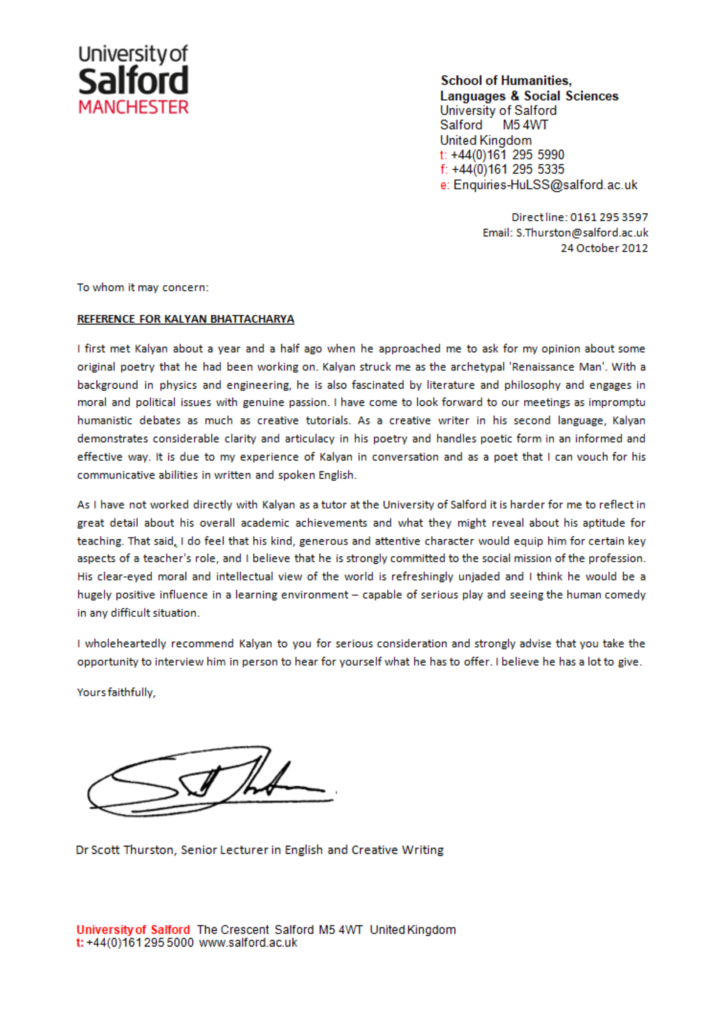
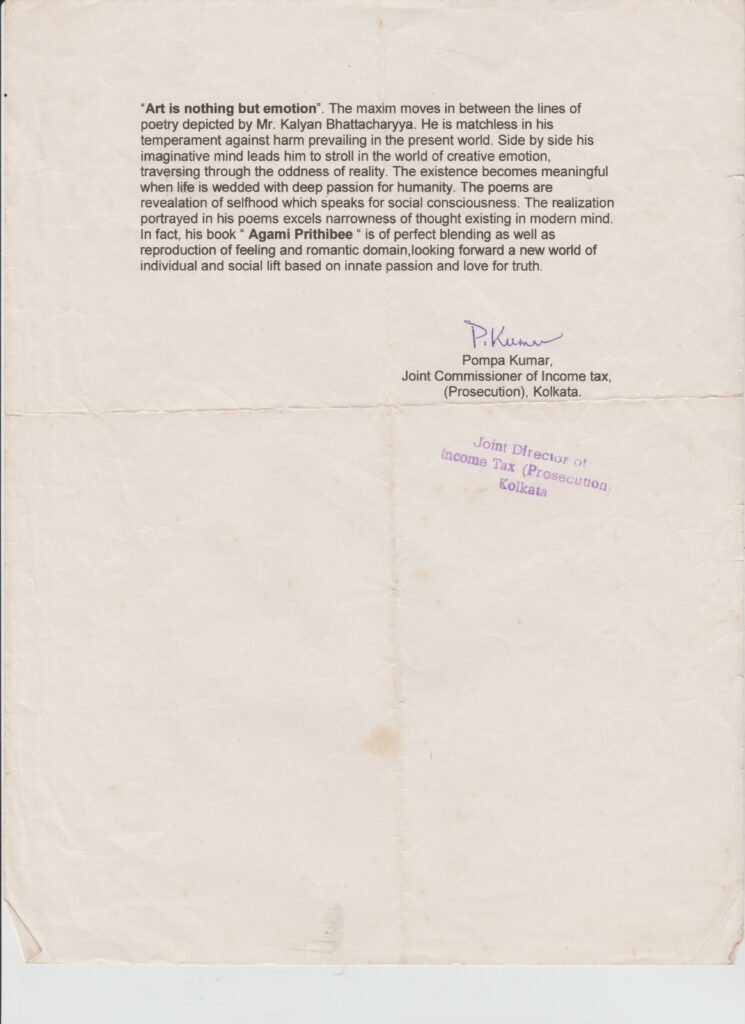
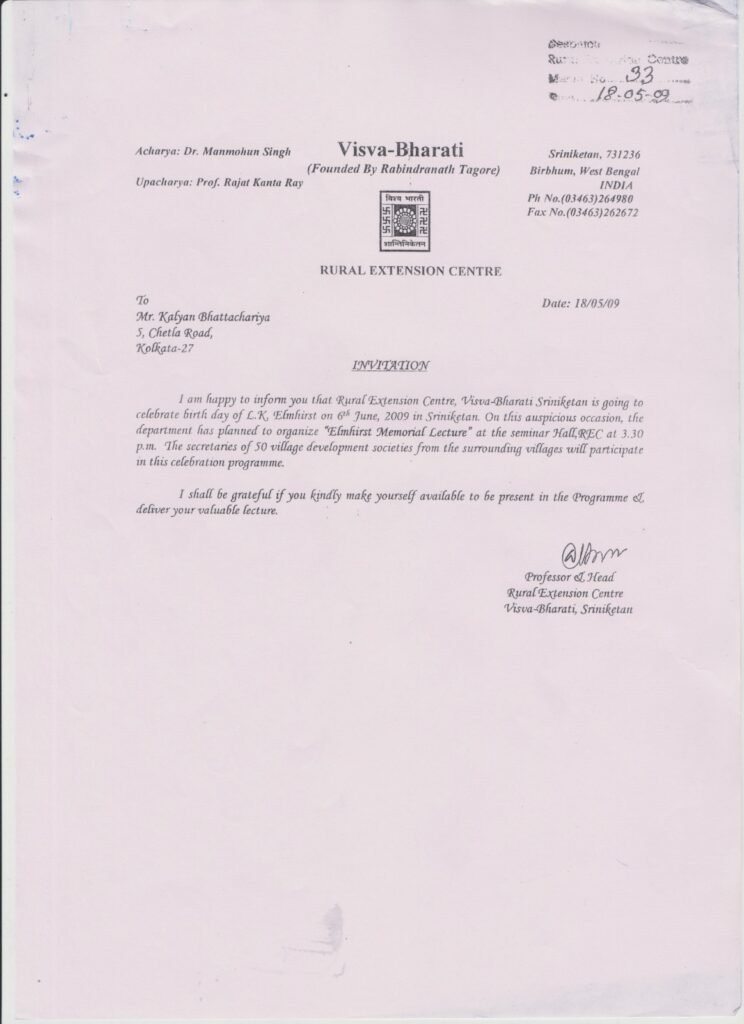
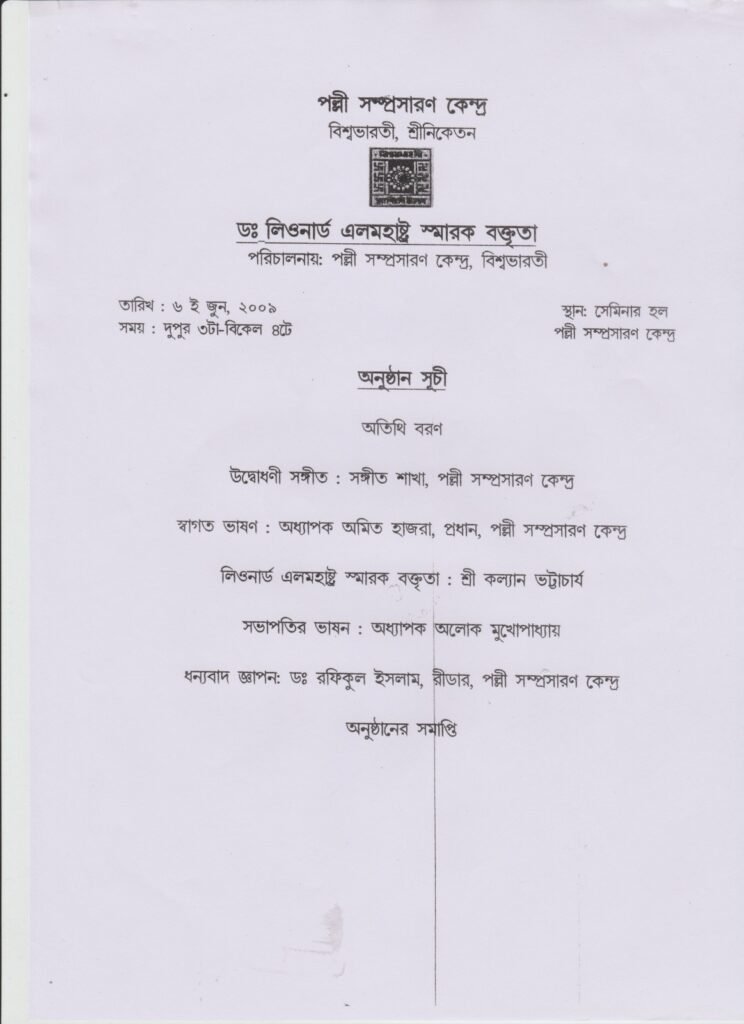
Chairman
Kalyan Bhattacharya, M.Sc. United Kingdom (Engineering) , Ex. CEO , Board Member , United Kingdom
Member:
• International Project Management Association IPMA (World)
• British Council Alumni UK
• Commonwealth Foundation
• Global Compassion Coalition
Execution / Programme
- We would try to create ‘Character and Culture’ in the society through various cultural programmes, such as, drama, films, documentaries of great men and explaining in a very simple and easy manner the relevant poems and literature of the great men.
- Reciting and explaining poems, songs and short stories of the writers that are relevant to this cause.
- Organizing discussions and debates on topical relevant issues by inviting the stakeholders.
- Initiate to write essays and short stories at all levels right from the children’s in Schools, Colleges, and Universities and from the general public on relevant topics in the competition.
In short we need to bring about a culture of cooperation and respect among all men.
Education
As we all know that, whatever we humans deliver when we grow the ‘good or bad’ comes from our education that we have gathered from parents, educational institutions and the society since birth. Education of all kinds, formal and informal shapes a human being. He delivers what he believes, what he learnt all throughout his life.
Consequently, education should be such that, a man has to be enriched
(1) academically and or professionally;
(2) and at the same time morally with values and ethics.
These two aspects of education form the very foundation of education. They are the two pillars of education. Both are inseparable, and each one is an integral part of the other. They both should ‘walk hand in hand’.
Education would be meaningless with any one of them without the other.
These two should go simultaneously side by side all along and all throughout a man’s life. If the above two steps are regarded as ‘Mantra for education’ for making a human being, the society would begin to change for the betterment. And gradually we could create a world with no hunger and cries and the war would vanish forever. We all could live in perfect peace, loving and caring for each other.
We have divided this Education into two parts :-
(1) Online Education through Easy Learning.
(2) Science Club
Self-Learning in open air green & flowery environment through experiments –instincts-perception-conception under passive mentoring.
(1) ONLINE EDUCATION
Empowering Education Through
Easy Learning
Making Quality Learning Simple, Accessible, and Inclusive for All
Easy Learning is an educational initiative dedicated to breaking barriers in learning by providing simple, effective, and accessible educational solutions. Our mission is to empower students, educators, and communities through knowledge that is practical, engaging, and easy to understand.
By focusing on clarity, innovation, and inclusivity, Easy Learning aims to create equal learning opportunities for learners from all backgrounds. We believe that education should not be complicated it should inspire growth, confidence, and lifelong learning.
(2) SCIENCE CLUB
Here I just quote two sayings of Rabindra Nath Thakur about how he used to look at the Education System. We all know what he wanted to tell us through his Tota Kahini. Below there are two quotations from Rabindranath’s Shikha essay.
শিক্ষার স্বাঙ্গীকরণ :
“আমাদের শিক্ষাকে আমাদের বাহন করিলাম না, শিক্ষাকে আমরা বহন করিয়াই চলিলাম, ইহারই পরম দুঃখ গোচরে অগোচরে আমাদের মনের মধ্যে জমিয়া উঠিতেছে।“
“শিক্ষায় মাতৃভাষাই মাতৃদুগ্ধ, জগতে এই সর্বজনস্বীকৃত নিরতিশয় সহজ কথাটা বহুকাল পূর্বে একদিন বলেছিলেম; আজও তার পুনরাবৃত্তি করব।“
“School failed me, and I failed the school. It bored me. The teachers behaved like Feldwebel (sergeants). I wanted to learn what I wanted to know, but they wanted me to learn for the exam. What I hated most was the competitive system there, and especially sports. Because of this, I wasn't worth anything, and several times they suggested I leave. This was a Catholic School in Munich. I felt that my thirst for knowledge was being strangled by my teachers; grades were their only measurement. How can a teacher understand youth with such a system? From the age of twelve, I began to suspect authority and distrust teachers.”
― Albert Einstein
(In a conversation with William Hermanns).
The very existing education system today all throughout the globe is more or less ‘carrying loads of education’ on the shoulder. So the students get tired and bent down to carry such loads all throughout their life. Here the importance is given upon how far the student could produce what he has been taught, and not upon how far he could conceive the subject and understand the ins and out of it. .(Rabindranath Tagore.....). There is no joy in going through it, because the students fail to discover the essence and truth the subject carries.
So it is quite evident that the chief aim of education to make a man truly creative and free from all prejudices could not be achieved. Still huge amount of ‘wealth-enterprise-time’ is invested to make such human robots.
Our motto:
Our motto is to impart education through Self-learning, so to say learning through student’s instinct and perception. This would be explorative; the child himself would explore the subject by going in depth through experiments under the passive guidance of his mentor. These experimental devices would be like their toys. These would be kept and used in such a manner, so that they could regard them as their toys. This would be the essence of our Science Club which would show how actually the education should be given to the students in future.
Participation in different activities